
📋 Instructions
- 1
Combine chicken with yogurt, ginger garlic paste, biryani masala, red chili powder, turmeric, coriander powder, lemon juice and salt. Marinate minimum 1 hour, overnight preferred.
- 2
Heat oil and ghee together. Fry sliced onions on medium heat for 18-22 minutes until deep golden brown. Remove half for garnish.
- 3
Add tomatoes to remaining onions. Cook until soft. Add marinated chicken. Bhuno on high heat until water evaporates and oil separates. Add alu bukhara and kewra water.
- 4
Boil water with whole spices and salt. Add soaked rice and cook to 70% done. Drain immediately.
- 5
Layer half rice over chicken masala. Add mint, coriander, fried onions, lemon slices, and food color. Add remaining rice. Seal and cook on dum for 20 minutes.
Chef Notes & Tips
Every Pakistani household has a biryani recipe. The problem is that most of them rely on a packet of Shan or Bombay masala to do the heavy lifting, and the result always tastes like it came from a packet of Shan or Bombay masala. This is not that recipe. This is the version built from scratch, with a proper biryani masala ground fresh, a chicken that is bhunoed until the oil separates properly, parboiled rice that is pulled at exactly 70%, and a dum that ties it all together. It takes longer. It tastes completely different.
Biryani in Pakistan is not just a dish. In Karachi especially, it is a cultural institution. It shows up at weddings, on Fridays, at dawat dinners, and on any occasion where someone wants to say they made an effort. This recipe respects that weight.
Homemade Biryani Masala (Grind Fresh)
- 4wholeGreen cardamom pods
- 2wholeBlack cardamom pods
- 4wholeCloves
- 1inchCinnamon stick
- 1tspCumin seeds
- 1/2tspBlack peppercorns
- 1tspCoriander seeds
- 1/4tspNutmeg, grated
- 2wholeBay leaves
Dry roast all together for 2 minutes. Cool completely. Grind to a fine powder. This is your fresh biryani masala. Use 2 tablespoons for this recipe.
Chicken and Marinade
- 1kgChicken, bone-in, cut into 10 to 12 pieces
- 1cupFull-fat yogurt, whisked smooth
- 2tbspGinger garlic paste, freshly ground
- 2tbspFresh biryani masala (from above)
- 1tspRed chili powder
- 1/2tspTurmeric powder
- 1tspCoriander powder
- 2tbspLemon juice
- 1tspSalt
For the Chicken Masala
- 4mediumOnions, thinly sliced
- 3mediumTomatoes, roughly chopped
- 5wholeAlu bukhara (dried sour plums)
- 4tbspCooking oil
- 2tbspGhee
- 2tbspKewra water
- 5 to 6wholeGreen chilies, slit
For the Rice
- 3cupsAged basmati rice, washed and soaked 30 minutes
- 2wholeBay leaves
- 4wholeGreen cardamom pods
- 4wholeCloves
- 1tspCumin seeds
- 2tspSalt
Garnish and Finishing
- 1handfulFresh mint leaves
- 1handfulFresh coriander leaves, roughly chopped
- 1mediumLemon, sliced into rounds
- 1/4tspYellow food color mixed with 2 tbsp warm milk
- 1/2cupFried onions (reserved from cooking)
Method
- Grind the biryani masala. Dry roast all the whole spices listed under biryani masala in a cast iron pan over medium-low heat for 2 minutes until they are fragrant and slightly darkened. Let them cool completely, then grind to a fine powder in a spice or coffee grinder. Set aside. This one step will make your biryani smell like a proper restaurant, not a packet.
- Marinate the chicken overnight if possible. Combine the chicken with yogurt, ginger garlic paste, biryani masala, red chili powder, turmeric, coriander powder, lemon juice, and salt. Mix until every piece is thoroughly coated. Cover and refrigerate for at least 1 hour. Overnight marination gives the chicken a depth of flavor that a short marination simply cannot match. When ready to cook, let the chicken come to room temperature for 20 minutes.
- Fry the onions properly. This step cannot be rushed. Heat oil and ghee together in a large heavy-bottomed pot over medium heat. Add the sliced onions. Cook, stirring occasionally, for 18 to 22 minutes until they are a deep golden brown, almost mahogany at the edges. Do not rush this on high heat or the onions will burn on the outside while remaining raw in the center. Remove half the fried onions and set aside for garnish.
- Build the chicken masala. To the remaining fried onions, add the chopped tomatoes and green chilies. Cook on medium-high heat for 6 to 8 minutes until the tomatoes break down completely and the oil starts to separate at the edges. Add the marinated chicken along with all its marinade. Increase to high heat and bhuno (stir-fry) the chicken for 10 to 12 minutes, constantly stirring, until all the water from the yogurt has evaporated and the oil clearly separates and pools at the sides of the pot. This stage is the most important step in Pakistani cooking. Do not stop early.
- Add alu bukhara and kewra water. Once the oil has separated, reduce heat to low. Add the alu bukhara (dried plums) and kewra water. Stir once. Cover and cook on low heat for 8 minutes until the chicken is fully cooked through. Taste and adjust salt. The masala should be rich, thick, and fragrant. Remove from heat and set aside while you cook the rice.
- Parboil the rice to exactly 70%. Bring a large pot of water to a rolling boil. Add salt, bay leaves, cardamom pods, cloves, and cumin seeds. Drain the soaked rice and add to the boiling water. Cook on high heat for 5 to 6 minutes. Check a grain by pressing it between your fingers. It should feel mostly cooked but still have a small firm core in the center. That is 70%. Drain immediately into a colander. Do not let the rice sit in the water a second longer. Overcooked rice at this stage becomes mush during dum.
- Layer the biryani. In the same pot used for the chicken masala, spread the chicken and its masala evenly across the bottom. Spread half the parboiled rice evenly over the chicken. Scatter half the fried onions, half the mint, half the coriander, and half the lemon slices over the rice. Add the remaining rice as the top layer. Scatter the remaining fried onions, mint, coriander, and lemon over the top. Drizzle the yellow food color mixed with milk across the rice in a zigzag pattern to give the characteristic biryani color contrast.
- Seal and cook on dum. Cover the pot tightly with a sheet of aluminum foil first, then place the lid firmly on top. The foil seal is important: it traps every molecule of steam inside the pot. Place a tawa or flat griddle pan underneath the pot on the stove (this diffuses the heat and prevents the bottom from burning). Turn heat to the highest for 3 minutes to generate strong initial steam. Then reduce to the absolute lowest heat setting and cook for 18 to 20 minutes. Switch off the heat and let the pot rest, still sealed, for 10 minutes.
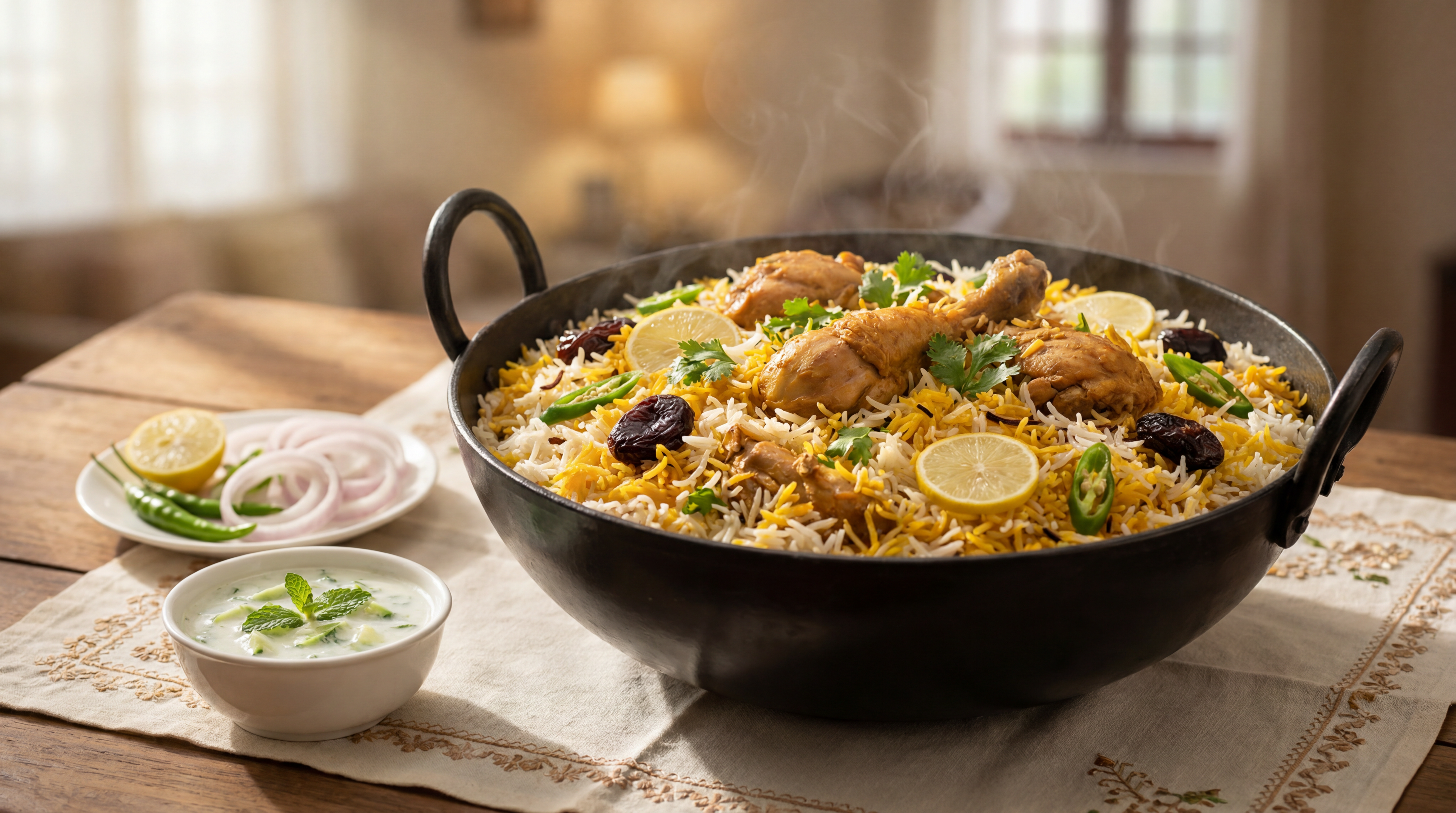
- Open, fold gently, and serve. Remove the foil seal. Using a wide flat spatula or large spoon, gently fold the biryani from the bottom up in two or three wide motions. Do not stir aggressively or the rice grains will break. Every fold should reveal the two-toned rice with yellow and white grains, the glistening chicken pieces, and the fresh herbs. Serve immediately from the pot at the table.
What Makes Pakistani Biryani Different From Everything Else
Pakistani biryani, particularly the Karachi style, has a character that sets it apart from its Indian and Hyderabadi counterparts. The flavor profile that Pakistani cooks call "karara" describes a savory, slightly sour quality that comes from the combination of yogurt in the marinade, dried plums in the masala, and lemon in the garnish. This sourness is deliberate and defining.
The rice in a good Pakistani biryani is a mix of colors: white grains from the plain rice, golden grains from the food color, and slightly translucent grains that have absorbed the masala from below. They are all fully cooked but completely separate. Sticky rice in biryani is a failure of technique, not a style preference.
The bhunoing of the chicken masala is the step that most recipe shortcuts skip, and it is the step that makes the biggest difference. Bhuno means to cook on high heat while constantly stirring until all the water evaporates and the oil separates and appears at the sides of the pan. This concentrates the flavors in a way that simmering cannot replicate. When the oil separates, the masala is ready. Not before.
Common Biryani Mistakes and How to Fix Them
Rice turns out sticky or mushy
The rice was overcooked before layering. Pull it at 70%, meaning there is still a small firm core when you press a grain. It will finish during dum. Also make sure you are using aged basmati rice, not fresh or regular long-grain rice.
Chicken is dry or tough
Either the marinade time was too short, or the chicken was overcooked during bhunoing. Overnight marination in yogurt keeps the chicken moist. During bhunoing, cook until oil separates but do not continue past that point. The chicken finishes during the dum step.
Biryani has no fragrance
The biryani masala was from a packet or the whole spices were not fresh. Freshly ground whole spices are the single biggest contributor to biryani fragrance. The kewra water also matters significantly. Do not skip either.
Bottom layer of rice is burned
The tawa was not placed under the pot, or the heat was too high during dum. Use a tawa, start on high for three minutes only, then reduce to the absolute lowest setting. If you have an electric stove, use the smallest ring on the lowest setting.
Biryani tastes flat or bland
Salt at every stage is the most common fix. Salt in the rice water. Salt in the marinade. Salt adjusted in the masala before layering. Biryani with under-salted rice can never be fixed after dum.
Serving Suggestions
Pakistani chicken biryani is traditionally served with raita made from whisked yogurt, grated cucumber, finely diced onion, fresh mint, a pinch of cumin, and salt. On the side, a simple kachumber salad of diced onion, tomato, green chili, lemon juice, and a sprinkle of chaat masala. A wedge of lemon at the side of each plate is standard. Dahi baray alongside biryani is common at dawat dinners. The biryani always goes in the center of the table, served from the pot it was cooked in.
Approximate Nutrition Per Serving
Based on 5 servings. Values are estimates and exclude raita and sides.
Frequently Asked Questions
What is the secret to perfect Pakistani biryani?
Three things define it: a properly bhunoed chicken masala where oil fully separates, rice pulled at exactly 70% before layering, and a tight foil seal during dum so no steam escapes. Overnight marination adds a fourth. Skip any of these and the result is noticeably different.
What rice is best for Pakistani biryani?
Aged long-grain basmati is the only correct choice. Aged basmati has lower moisture content and naturally produces separate, fluffy grains. Sella basmati is a good alternative. Never use short-grain, brown, or regular long-grain rice. The quality and age of your rice is one of the biggest factors in the final texture.
What is dum cooking in biryani?
Dum is a slow steam cooking technique where the layered biryani pot is sealed airtight with foil and a lid, then cooked over very low heat. The trapped steam finishes the rice, infuses every grain with the fragrance of the chicken masala and whole spices below, and melds all the flavors together. It is the step that separates biryani from pilaf.
What is alu bukhara and do I need it?
Alu bukhara are dried sour plums that add the signature sweet-tangy depth to Pakistani biryani. They are available at Pakistani and South Asian grocery stores. They can be substituted with dried prunes if needed, or omitted entirely for a version without that particular sourness. The biryani will still be very good without them, but it will taste slightly different from the traditional Karachi style.
Can I make Pakistani biryani without kewra water?
Kewra water (screwpine flower extract) adds a distinct floral fragrance that is strongly associated with Pakistani biryani's aroma. It is available at most Pakistani grocery stores and online. If unavailable, it can be omitted, but the fragrance profile will be noticeably different. Rose water is sometimes used as a substitute though the result is sweeter and less authentic.
How long does biryani keep and can I reheat it?
Pakistani biryani keeps well in the refrigerator for up to 2 days in an airtight container. To reheat, add a splash of water to the pot, cover tightly, and warm over very low heat for 8 to 10 minutes. Do not microwave uncovered as it dries the rice unevenly. Biryani genuinely tastes better the next day after the flavors have had time to fully develop.
What do you serve with Pakistani chicken biryani?
Raita is the essential accompaniment: whisked yogurt with grated cucumber, mint, cumin, and salt. A kachumber salad of diced onion, tomato, green chili, and lemon juice goes on the side. Dahi baray alongside biryani is common at formal dinners. The biryani should always be served in the pot it was cooked in, at the center of the table.