
📋 Instructions
Chef Notes & Tips
Afghani Chicken Karahi Recipe (Authentic White Karahi)
Most people who have eaten at a good Pakistani dhaba know there is a karahi on the menu that looks completely different from everything else. No red masala. No tomato base. Just a pale, creamy, incredibly aromatic dish that smells of roasted cumin and black pepper and disappears faster than anything else on the table. That is Afghani Karahi. And the reason it tastes so different from every other karahi is simple: there are no tomatoes in it at all.
This recipe is the real version. The one that Pakistani dhabas in Peshawar, Rawalpindi food streets, and Afghan-influenced eateries across the country actually cook. The liquid base is built from full-fat milk, fresh cream, and whisked yogurt together, not just yogurt alone. The heat comes entirely from black pepper and green chilies, not from red chili powder. The spices are kept to a minimum on purpose. That restraint is exactly what makes this dish taste the way it does.
Ingredients
4>Spices- 1 teaspoon freshly ground black pepper (this is the primary spice, do not reduce)
- 1 teaspoon cumin seeds, dry roasted and coarsely crushed
- 1 teaspoon coriander seeds, dry roasted and coarsely crushed
- 1/2 teaspoon white pepper powder
- 1/2 teaspoon garam masala
Green Chilies and Garnish
- 4 to 5 whole green chilies, slit lengthwise down the middle
- 2 tablespoons julienned fresh ginger
- Handful of fresh coriander leaves, roughly chopped
- 2 green chilies, thinly sliced for garnish
- 1 tablespoon fresh lemon juice
Method
- Roast and crush the spices first. Place cumin and coriander seeds in a dry cast iron or steel pan over medium-low heat. Roast for 3 to 4 minutes, stirring constantly, until they change color slightly and release a deep nutty aroma. Take off heat immediately and let cool completely. Crush coarsely in a mortar and pestle. You want a rough, uneven texture, not a fine powder. This step takes 7 minutes and makes a bigger difference to the final taste than any other single step in this recipe.
- Sear the chicken on high heat. Heat ghee and oil together in a karahi or heavy-bottomed wok over high heat until the ghee is shimmering. Add the chicken pieces in a single layer and sear for 6 to 8 minutes, turning once, until golden on the outside. The chicken does not need to be cooked through yet. Remove and set aside on a plate. Do not wash the pan. The caramelized bits left behind are flavor.
- Build the aromatic base. Reduce heat to medium. Add ginger garlic paste directly into the ghee and fry for 1 to 2 minutes until the raw smell disappears completely. Be careful not to let it brown or burn. Return the chicken pieces to the pan. Add salt and stir everything to coat the chicken evenly.
- Add yogurt and cook it out fully. Add the whisked yogurt to the pan. The yogurt must be smooth before it goes in. Any lumps will cause it to split and curdle. Increase heat to medium-high and cook, stirring frequently, for 8 to 10 minutes. You are waiting for two things: the yogurt to be fully absorbed into the chicken, and the oil to visibly separate and rise to the surface of the pan. Do not move to the next step until both of these have happened.
- Add the milk. Once the oil has separated, pour in the full-fat milk. Stir gently to combine with the ghee and chicken. The milk will loosen the base and begin to create the silky, pale gravy that defines this dish. Cook on medium heat for 4 to 5 minutes, stirring occasionally.
- Add the spices. Add the black pepper, white pepper, roasted crushed cumin, roasted crushed coriander, and garam masala. Stir everything together and cook for 2 minutes so the spices bloom properly in the liquid. Taste the gravy at this point and adjust salt.
- Add fresh cream and green chilies, then finish. Add the fresh cream and slit green chilies. Stir gently to incorporate. Cook uncovered on medium heat for 5 to 6 minutes. The gravy should thicken to a glossy, creamy consistency that coats the back of a spoon. It should not be runny. If it is too thick, add a splash more milk. If it is too thin, increase heat and stir until it reduces to the right consistency.
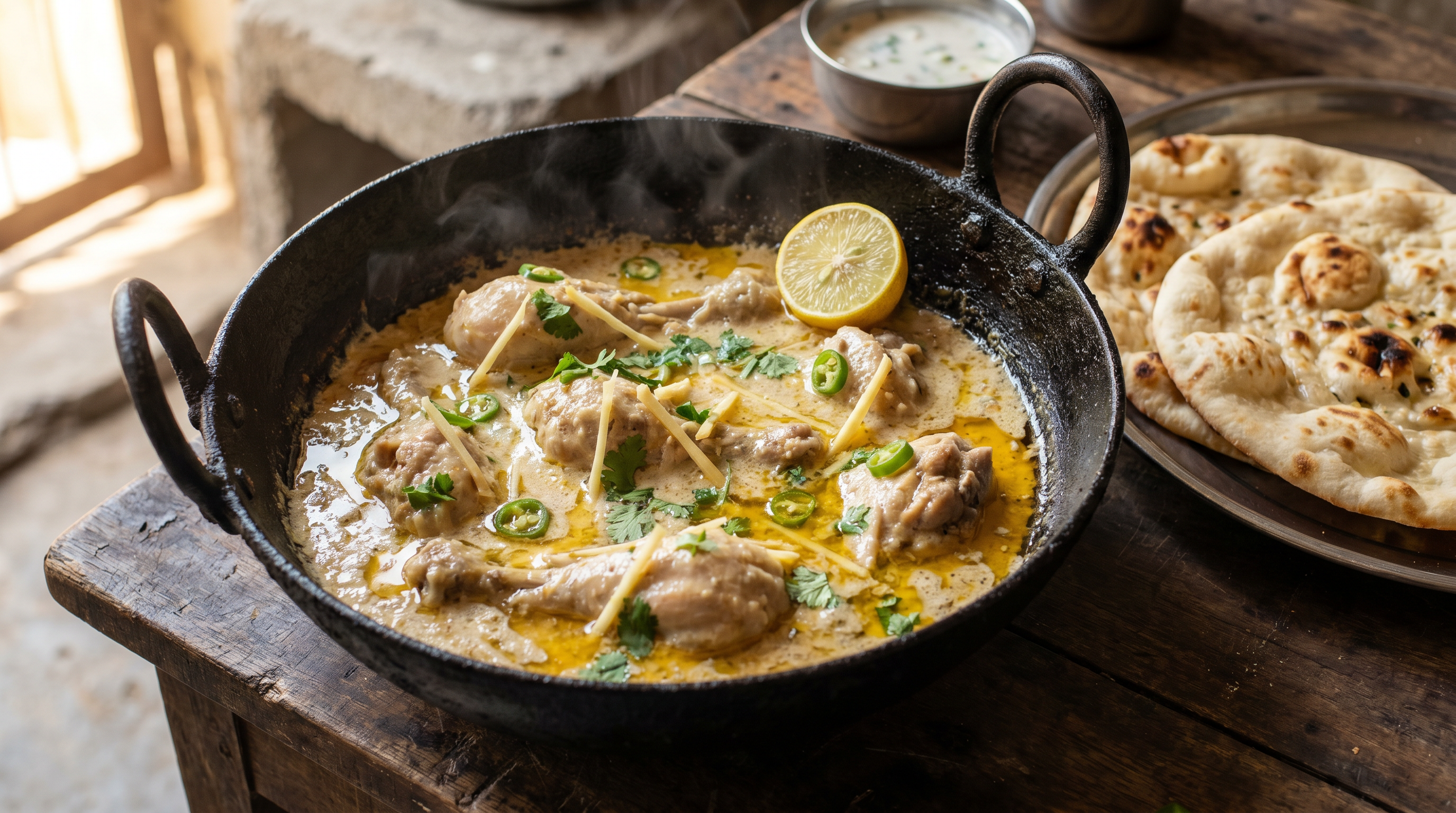
- Garnish and serve immediately. Remove from heat. Squeeze lemon juice over the top. Pile julienned ginger across the dish, scatter fresh coriander and sliced green chilies. Serve straight from the karahi while still hot. This dish does not hold well and is at its best the moment it comes off the heat.
Why This Karahi Tastes Different From Everything Else
The reason Afghani Karahi has its own name and its own reputation in Pakistani food culture is because it is genuinely a different dish from karahi, not just a variation. Standard Pakistani chicken karahi is built on a tomato and ginger base. The tomatoes provide the liquid, the body, the color, the sourness, and much of the flavor. Everything in that recipe is working in conversation with the tomato.
In Afghani Karahi, the tomato is gone entirely. The entire structure of the dish changes. The dairy takes over. The spice selection changes because you no longer have the natural acidity of tomato to balance things. Black pepper becomes the leading flavor instead of red chili. Roasted cumin and coriander provide the body that the tomato would have provided. The green chilies contribute heat in a fresh, clean way that does not overwhelm the creaminess.
The result is a dish that is simultaneously milder in sharpness but richer in depth. People who find regular karahi too acidic almost always prefer this. It is also one of the reasons it became popular at dawat dinners, because the creamy, golden color looks as good as it tastes when it arrives at the table.
Spice Guide for This Recipe
The spice list here is deliberately short. Afghani Karahi is not a dish that benefits from complexity in its spice blend. It benefits from restraint and from getting each individual spice right.
Black pepper is the non-negotiable. It is the primary heat source, the primary flavor, and the ingredient that gives this dish its character. Use freshly ground pepper, not the pre-ground powder from a jar that has been sitting on a shelf. The difference is significant. One teaspoon is the minimum. Some recipes use more.
Roasted cumin and coriander provide the earthy, nutty backbone that holds everything together. Do not skip the roasting step and do not use pre-roasted ground cumin from a packet. The flavor of freshly roasted and coarsely crushed seeds is completely different from the powder.
White pepper gives an extra layer of warmth without adding color. It is optional but recommended. Garam masala goes in at the end, lightly, just to bring the spices together without dominating.
Serving Suggestions
Afghani Karahi is almost always served with tandoori naan. The naan is used to scoop the creamy gravy directly from the karahi, which is why it is traditionally served from the cooking vessel at the table rather than plated. Roomali roti is the second classic pairing. Serve alongside a simple salad of white onion rings, sliced green chili, fresh coriander, and a wedge of lemon. A glass of cold lassi makes the perfect accompaniment to balance the richness of the cream.
Approximate Nutrition Per Serving
Based on 4 servings. Values are estimates.
Frequently Asked Questions
What is the difference between Afghani Karahi and regular Chicken Karahi?
Regular Pakistani chicken karahi is built on a tomato and ginger base and is deep red in color. Afghani Karahi contains no tomatoes at all. The base is made entirely from milk, cream, and yogurt, giving it a pale cream color and a completely different flavor. The heat comes from black pepper and green chilies rather than red chili powder.
Does Afghani Karahi use yogurt or milk?
Both, along with fresh cream. The authentic recipe uses all three dairy elements together. Yogurt builds the flavor base, milk creates the silky, flowing consistency that makes this dish recognizable, and cream provides the richness and finish. Using only yogurt and cream makes a thicker, heavier dish. The milk is what gives authentic Afghani Karahi its particular texture.
Can I use boneless chicken for this recipe?
You can, but bone-in chicken is strongly recommended. The bones release natural fat during the high-heat cooking process that deepens the flavor of the gravy significantly. If you use boneless chicken, reduce the cooking time to avoid drying the meat out, and expect a slightly lighter result in flavor.
Why does my gravy split or look curdled?
This happens when yogurt is added cold, in lumps, or before the oil separates. Always whisk the yogurt completely smooth before adding it to the hot pan. Let the yogurt cook out fully until oil separates before adding the milk. If your gravy has already split, lower the heat and stir in a splash of warm milk. This usually brings it back together.
What do you serve with Afghani Karahi?
Tandoori naan is the classic pairing. The naan is used to scoop the creamy gravy directly from the cooking karahi. Roomali roti also works well. Serve alongside sliced raw onions, fresh coriander, green chilies, and lemon wedges on the side. Cold lassi pairs well with the richness of the cream base.
How do I store and reheat leftover Afghani Karahi?
Store in an airtight container in the refrigerator for up to 2 days. When reheating, add a splash of full-fat milk to the pan before warming over low heat. The milk prevents the cream from breaking and restores the original consistency. Do not microwave on high heat as this can cause the dairy to separate.