
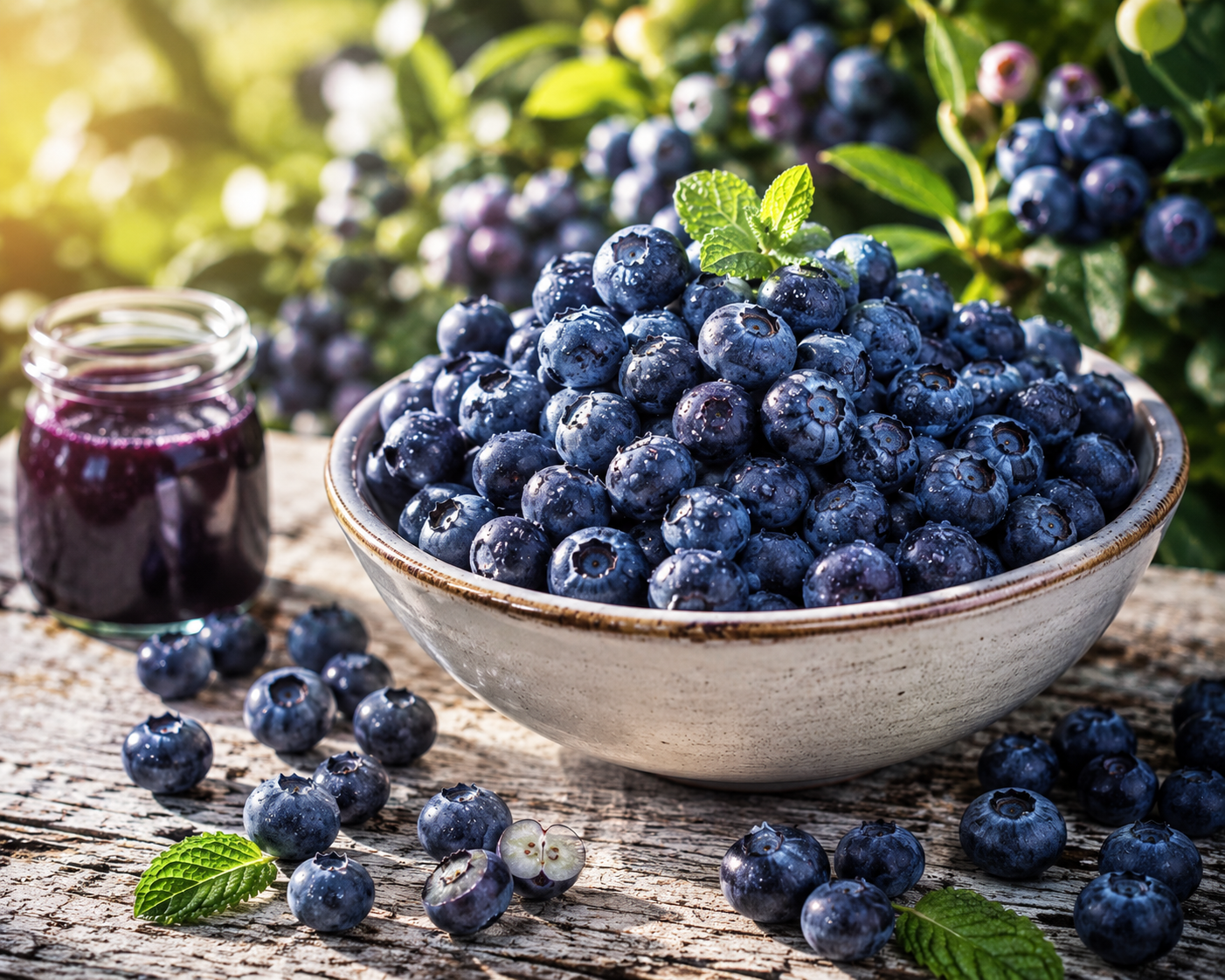
Most health claims made about foods online sit somewhere between optimistic and completely made up. Blueberries are one of the rare exceptions where the research is genuinely deep, consistently positive across independent studies, and now spanning multiple decades of peer-reviewed work. This is not a superfood marketing story. This is what the science actually shows, as of 2026.
We will cover where blueberries came from, what is inside them that does the work, and what cardiovascular, cognitive, gut health, and exercise recovery studies have found. No miracle cures. No exaggerated claims. Just the evidence.
A Brief History of the Blueberry
Blueberries are native to North America. Indigenous peoples across the continent had been harvesting wild blueberries for thousands of years before European contact, using them as food, medicine, and preservative. Dried blueberries were mixed with fat and meat to make pemmican, one of the earliest forms of long-shelf-life nutritional food.
Wild blueberries grew naturally across the northern parts of the continent, particularly in the acidic, low-fertility soils of the northeastern United States and eastern Canada. Europeans who arrived largely ignored them at first. Commercial cultivation did not begin until the early 20th century.
In 1911, Elizabeth Coleman White, a cranberry farmer in New Jersey, partnered with botanist Frederick Coville to selectively breed and cultivate highbush blueberries for the first time. Their work turned a wild foraged fruit into a commercially viable crop and launched what is now a multi-billion dollar global industry. Today, the United States, Canada, Chile, Peru, and South Africa are the world's largest blueberry producers.
Wild blueberries, still harvested across Maine and the Maritime provinces of Canada, are smaller, darker, and significantly higher in anthocyanins than their cultivated counterparts.
What Is Actually Inside a Blueberry
The most important compound in blueberries is anthocyanin, a type of flavonoid responsible for the fruit's distinctive deep blue-purple color. Blueberries contain one of the highest concentrations of anthocyanins among commonly eaten fruits and vegetables. These compounds are powerful antioxidants that help neutralize free radicals in the body, reducing oxidative stress and inflammation.
A one-cup serving (approximately 148 grams) of raw blueberries contains:
| Nutrient | Amount | % Daily Value |
|---|---|---|
| Calories | 84 kcal | 4% |
| Carbohydrates | 21.4g | 8% |
| Dietary Fiber | 3.6g | 13% |
| Sugars | 14.7g | - |
| Protein | 1.1g | 2% |
| Fat | 0.5g | 1% |
| Vitamin C | 14.4mg | 16% |
| Vitamin K | 28.6mcg | 24% |
| Vitamin E | 0.8mg | 5% |
| Manganese | 0.5mg | 22% |
| Anthocyanins | 100 to 300mg | No DV established |
One cup delivers meaningful amounts of vitamin C, vitamin K, and manganese at just 84 calories. The fiber content supports digestive health. The anthocyanin load is where most of the research-backed benefits originate.
5 Research-Backed Health Benefits of Blueberries
Heart Health
Reduced cardiovascular disease risk through improved blood vessel function and lower blood pressure
Brain Function
Potential improvements in spatial, short-term, and long-term memory and executive function
Blood Sugar
Associated with reduced risk of type 2 diabetes and improved glucoregulatory function
Gut Health
Prebiotic fiber supports beneficial gut bacteria; wild blueberries show positive microbiome effects
Exercise Recovery
Anti-inflammatory anthocyanins may reduce muscle soreness after intense exercise
Weight Management
Low in calories, high in fiber, associated with better appetite regulation and satiety
1. Cardiovascular Health
The strongest and most consistent body of evidence around blueberries concerns heart health. Epidemiological studies across large population groups associate regular blueberry and anthocyanin intake with reduced risk of cardiovascular disease and death. These are findings from long-term prospective cohort studies involving tens of thousands of participants over many years.
2026 Research
A comprehensive review published in January 2026 in Critical Reviews in Food Science and Nutrition confirmed that wild blueberries support cardiovascular and gut health through multiple mechanisms, including improvements in blood vessel function, blood pressure, blood lipid profiles, and blood glucose regulation.
Anthocyanins interact with the endothelial cells lining blood vessels, improving their flexibility and reducing arterial stiffness. They also appear to favorably influence cholesterol levels by reducing LDL oxidation, one of the key early steps in atherosclerosis.
2. Brain Health and Cognitive Function
A 2019 review of the available literature found that blueberries may improve cognitive performance including spatial, long-term, and short-term memory. The researchers noted that study designs vary considerably, meaning the field is not yet at the point of issuing clinical recommendations, but the directional evidence is genuinely encouraging.
2024 Study
Researchers gave 60 adults with self-reported symptoms of depression either a blueberry drink followed by six weeks of supplementation or a placebo. A single dose of blueberries showed improvements in executive function: the mental processes responsible for planning, focus, and decision-making. Researchers noted this may warrant further clinical investigation.
The proposed pathway involves anthocyanins crossing the blood-brain barrier and reducing neuroinflammation, improving signaling between neurons, and protecting brain cells against oxidative damage.
3. Blood Sugar and Type 2 Diabetes Risk
Epidemiological evidence associates regular anthocyanin intake with reduced risk of type 2 diabetes. The proposed mechanism involves blueberries' ability to improve glucoregulatory function: essentially, improving the body's ability to manage blood sugar levels after eating. Their high fiber content and anthocyanin compounds appear to moderate their glycemic impact, making them a better choice than many other sweet foods for people managing blood sugar concerns.
4. Gut Health
Blueberries contribute to gut health in two distinct ways. Their fiber content acts as a prebiotic, feeding the beneficial bacteria that live in the colon. Simultaneously, anthocyanins and their metabolites interact directly with gut microbiota, and research suggests regular blueberry consumption may positively influence the diversity and composition of the gut microbiome. The 2026 wild blueberry review specifically confirmed gut health as one of the key areas where evidence supports a beneficial effect.
5. Exercise Recovery
Exercise Recovery Evidence
Nutritional interventions with blueberries have demonstrated the ability to improve recovery following exercise-induced muscle damage, attributable to their anti-inflammatory effects, according to a peer-reviewed roundtable published in Frontiers in Nutrition (2024).
For active individuals, this is practically relevant. Intense exercise causes microscopic muscle damage and triggers an inflammatory response that can delay recovery and increase soreness. Anthocyanins appear to help resolve this inflammation more efficiently without blunting the beneficial adaptive response.
Wild Blueberries vs. Cultivated Blueberries: Does It Matter?
Yes, though both are excellent choices. Wild blueberries are significantly smaller than cultivated ones and have a higher skin-to-flesh ratio, meaning a higher concentration of anthocyanins per gram. Studies specifically examining wild blueberries often show stronger effects in cardiovascular and gut health parameters.
Wild blueberries are sold primarily frozen outside of their harvest regions in Maine and eastern Canada. Frozen is perfectly fine nutritionally: studies confirm that freezing does not significantly degrade anthocyanin content. Cultivated highbush blueberries, the large fresh ones in most supermarkets, are still exceptionally nutritious. You do not need to seek out wild blueberries specifically to benefit. They are simply the higher-potency option if available.
How Much to Eat and How to Eat Them
The US Dietary Guidelines recommend 1.5 to 2 cup equivalents of whole fruit per day for adults. One cup of blueberries fits neatly within that recommendation and represents the serving size used in most positive research studies.
Fresh and frozen blueberries are nutritionally equivalent. Dried blueberries are more calorie-dense and often contain added sugar. Blueberry juice is typically lower in fiber and anthocyanins than whole berries because processing removes or degrades much of what makes the whole fruit valuable.
Simple ways to eat more blueberries daily: add a cup to overnight oats or Greek yogurt in the morning; blend them into a smoothie with spinach and banana; toss a handful onto a salad with goat cheese and walnuts; or eat them plain as a snack, which remains one of the best ways to enjoy them.
Blueberries are not magic. No single food is. But among the foods that have been subjected to sustained, rigorous, multi-decade scientific scrutiny, blueberries consistently come out well across multiple health domains. Heart health, brain function, gut health, blood sugar, exercise recovery: the evidence is real, it is peer-reviewed, and it keeps building. For a fruit that costs very little, takes no preparation, and tastes genuinely good, that is a rare combination.
Frequently Asked Questions
How many blueberries should you eat per day for health benefits?
Most research uses approximately one cup (148g) as the standard serving. The US Dietary Guidelines recommend 1.5 to 2 cup equivalents of whole fruit per day. Daily or near-daily consumption appears to produce better outcomes than occasional large amounts in most studies.
Are blueberries good for the brain?
Research suggests they may support cognitive performance including spatial and working memory. A 2024 clinical study found that a single dose of blueberries improved executive function in adults. The field is still growing and more standardized research is needed, but the directional evidence is genuinely encouraging.
Do blueberries reduce heart disease risk?
Epidemiological studies consistently associate regular blueberry consumption with reduced cardiovascular disease risk. A 2026 review in Critical Reviews in Food Science and Nutrition confirmed that wild blueberries support heart health through improvements in blood vessel function, blood pressure, and cholesterol profiles.
Are frozen blueberries as healthy as fresh?
Yes. Studies confirm that freezing does not significantly degrade blueberry anthocyanin content. Frozen blueberries, particularly wild ones, are a nutritionally equivalent and often more economical choice than fresh.
What makes blueberries a superfood?
The term "superfood" is marketing language, not science. What makes blueberries genuinely exceptional is their unusually high anthocyanin concentration combined with a strong multi-decade body of independent research linking regular consumption to cardiovascular, cognitive, and metabolic health benefits across multiple study designs.
Can blueberries help with weight loss?
A 2024 review found that blueberries, being low in calories and rich in fiber, may have beneficial effects on appetite regulation and help people feel fuller. Animal studies in the same review suggested possible effects on obesity prevention, though human clinical evidence in this specific area is still developing.